
Reusable Shopping Bags Wholesale: Materials, Costs and MOQ Guide
A B2B buying guide for reusable shopping bags: non-woven PP vs RPET vs cotton canvas vs jute compared by cost and lifespan, realistic wholesale prices, print options, MOQs, and the compliance tests retail programmes require.
7 min readreusable bagssourcingB2B
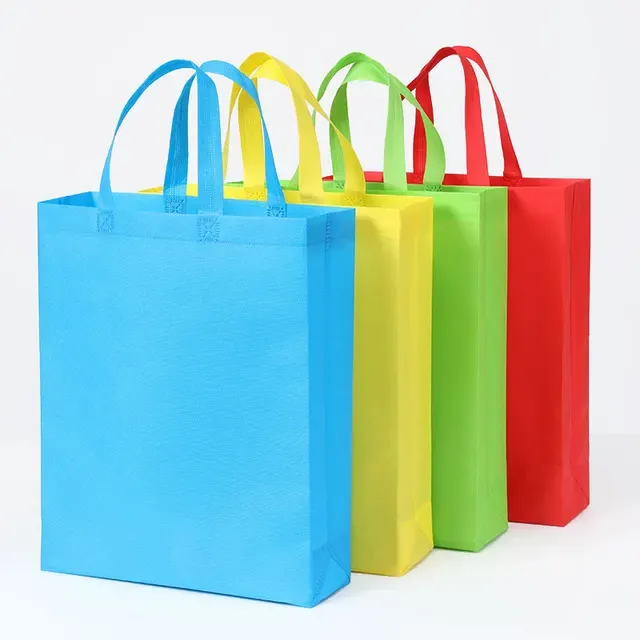
Reusable shopping bags are the highest-volume custom bag programme in retail - supermarket chains reorder them by the hundred thousand - and the entire commercial decision comes down to one trade-off: cost per bag versus trips per bag. This guide puts wholesale numbers on that trade-off across the four materials that dominate the category, then covers printing, MOQs and the compliance checks that separate a retail-grade programme from a giveaway that falls apart in a month.
The four materials that dominate reusable shopping bags
Every reusable shopping bag programme lands on one of four materials, and each occupies a distinct price-lifespan slot.
| Material | Typical spec | Ex-factory (1,000+ pcs) | Lifespan | Best fit |
|---|---|---|---|---|
| Non-woven PP | 70-90 GSM | $0.25-0.60 | 30-75 trips | Checkout bags, event giveaways |
| Woven PP (laminated) | 120-140 GSM | $0.70-1.40 | 100-200 trips | Supermarket heavy-duty bags |
| RPET | 190T-300D, GRS | $0.80-1.60 | 100-200 trips | Brands with recycled-content claims |
| Cotton canvas | 8-12 oz | $1.50-3.50 | Years | Premium retail, merch programmes |
Non-woven PP wins on price and owns the checkout-counter segment; its fabric is spun-bonded rather than woven, which is why it is cheap and why its handles are the first failure point. Laminated woven PP adds a printed film face and triple the trip count - the standard build for the sturdy supermarket bags sold at $1-2 retail. RPET brings the recycled story with polyester durability; what the GRS certificate behind that claim actually proves is covered in our RPET and GRS certification guide. Cotton canvas is the premium tier where the bag itself is merchandise - the fabric logic is in our tote bag fabric comparison. The honest rule: match the material to the realistic reuse pattern, not the marketing deck. A bag designed for 30 trips but claimed as "lifetime" is how programmes end up in sustainability audits.
Wholesale costs: what moves the quote
Across all four materials, three cost drivers account for nearly every price difference between quotes. Fabric weight comes first: moving non-woven PP from 80 to 100 GSM adds roughly 15-20% to the bag price but visibly improves handle strength and stance - usually the best money in the whole programme. Second is construction: heat-welded seams (ultrasonic) are cheaper than sewn ones and fine up to about 8 kg of load; stitched and cross-stitched handles cost $0.05-0.12 more per bag and roughly double the weight the bag survives. Gussets, reinforced bottom boards and PP-film lamination each add $0.08-0.25. Third is order structure: reusable grocery bags bulk pricing breaks meaningfully at 3,000, 5,000 and 10,000 pieces because fabric is produced in runs - a buyer at 4,800 pieces is often paying the 3,000-tier price when 200 more bags would cross the 5,000 break. Ask every supplier for the next price break and the quantity that triggers it; the answer frequently pays for itself.
Printing and branding on reusable bags
The print method follows the material, and mismatching them is the most common artwork disappointment in this category. Non-woven PP takes screen printing well for 1-3 solid colours at $0.10-0.30 per bag; for full-colour artwork, the laminated route - CMYK printed onto a film that is then bonded to woven PP - delivers photographic quality at $0.25-0.50 per bag but only makes sense at 3,000+ pieces because the film is produced per order. RPET prints like any polyester: screen printing for solids, heat transfer for gradients, with inks specified as REACH-compliant for EU retail. Cotton canvas takes water-based screen printing with the matte, soaked-in finish premium brands want - the same rules as in our canvas drawstring bags guide.
Two programme-level tips: keep artwork at least 25 mm away from seams and welds, where panels distort; and approve a pre-production sample on the production fabric, not a digital mock-up - lamination shifts colour noticeably, and a brand-red that drifts orange across 10,000 bags is an expensive discovery.
MOQs and lead times by material
MOQ in this category is set by how the fabric is made, which is why quoted minimums vary so widely between materials. Stock-colour non-woven PP is cut from rolls the factory already holds: 500-1,000 pieces with 1-colour print, 12-18 days production. Custom-dyed non-woven or any laminated full-colour build means the material is produced per order: 3,000-5,000 pieces and 25-35 days. RPET programmes inherit polyester dye-lot economics - 500-1,000 m of fabric per colour, so 1,000-3,000 bags, plus time for GRS paperwork if the retailer requires transaction certificates. Cotton and jute start around 500 pieces per design on natural shades; custom-dyed shades follow the dye-lot maths explained in our MOQ and lab dips guide. Sampling runs 5-10 days for all materials. The planning rule for retail programmes: first order on stock colours to hit the season, second order on custom-dyed material once volumes justify it.
Compliance: what retail chains actually check
Reusable bags sold or given at retail face checks that giveaway buyers can skip. Load tests come first: EU chains commonly specify the bag must carry 10-15 kg through repeated lift cycles - this is a handle-attachment test more than a fabric test, and it is where ultrasonic welds fail if the bag was built to a giveaway spec. GSM verification (cut-and-weigh, ±5%) catches the silent downgrade from 90 to 70 GSM that looks identical in photos. Inks and coatings need REACH compliance in the EU and, for bags carrying food, food-contact assessment - ask for the test report, not a yes. Recycled-content claims need GRS or RCS scope and transaction certificates that match the order quantity; retailers increasingly audit these after greenwashing enforcement tightened. And several US states now set minimum reuse and recyclability standards for bags sold at checkout - a US-bound programme should name the target states in the enquiry. These checks mirror the six fabric tests we run before cutting; at programme scale they take a third-party inspector a day and cost less than one rejected container.
Building your first programme
A complete reusable shopping bag enquiry fits in six lines: material and GSM, finished size with gusset, handle construction, print method with artwork, quantity with target date, and destination market for compliance. Send those six lines and quotes come back comparable; send "price for reusable bags?" and every supplier quotes the lightest build they think they can get away with.
Start the material decision from the reuse pattern, not the unit price - a $0.35 bag that survives 30 trips and a $1.20 bag that survives 150 are not the same product, and retail buyers know it. If the programme needs custom fabric - specific GSM, custom-dyed shades, GRS-certified RPET - our mill partners supply custom fabrics from the lot up, and the group's factory produces finished custom tote and shopping bag programmes under in-house quality assurance. Send your spec through the contact form and we will return a quote with the fabric spec sheet attached - the document that makes quotes comparable in the first place.
Free colour card and swatches
Get the colour card and three fabric proposals for your bag
Tell us the bag type and target price. We reply with two or three fabric options, swatches by courier and, if you need the bags made, a sample plan from our sister factory.