
Fabric MOQ, Lab Dips and Lead Times: How Custom Colour Actually Works
Why custom colour starts at 1,000 m, what a lab dip is, how a sealed standard keeps re-orders matching, and the real calendar from inquiry to inspected roll. The process buyers ask about most, explained once.
5 min readMOQcolourlead timesourcing
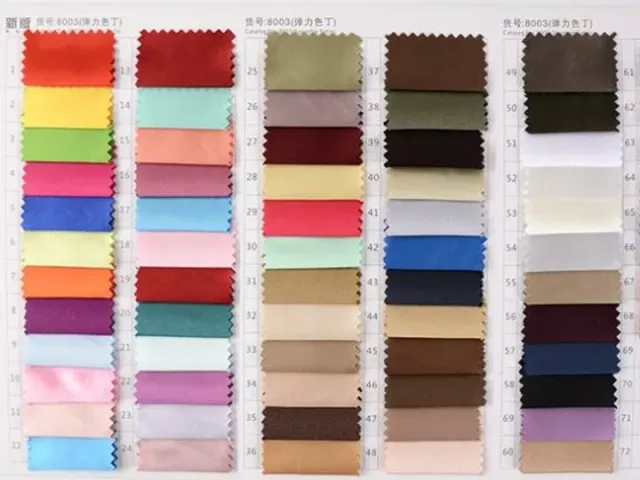
Every fabric inquiry we receive asks the same three things in a different order: what is the minimum, can you match my colour, and how long. Here is the whole process once, with the numbers we actually work to.
Fabric minimum order quantities (MOQ) explained
| What you want | MOQ | Why |
|---|---|---|
| Stock fabric, stock colour | 1 roll (50-100 m) | It is on the shelf |
| Stock fabric, custom Pantone | 1,000 m | Minimum dye-bath at the mill |
| Custom weave or coating | 3,000 m | Loom and coating-line set-up |
| Custom printed fabric | 500 m | Rotary or sublimation set-up |
| PU leather custom colour | 500 m | Colour is in the cast layer |
| Neoprene custom face colour | 500 m | Face fabric dyed before lamination |
1,000 m of 600D polyester makes roughly 600-800 backpacks, which is why bag MOQ (100 pieces) and fabric MOQ rarely align for a first order. Below 1,000 m we match to the nearest of 60+ stock colours and send the colour card so you choose with fabric in hand.
The lab dip: 3 days to a sealed colour standard
A lab dip is a small swatch dyed to your Pantone reference by the mill's lab. We submit it within 3 days of receiving the reference (Pantone TCX preferred; TPX and physical swatches accepted). You approve it, or request a shift ("warmer", "lighter"), and a second dip follows in 2-3 days.
Once approved, the dip is sealed: it becomes the standard for bulk, for every roll check in the D65 cabinet, and for every re-order. Twelve months later, the second order is checked against the same sealed swatch. That is what keeps a school programme's bags matching across years.
Shade band A/B: keeping re-orders identical
No two dye lots are identical. We approve bulk within shade band A/B - a visually indistinguishable tolerance under D65 - and reject C or worse. If a programme needs tighter control, we hold a single dye lot for the whole order.
Matching across components
Fabric, webbing, binding, zipper tape and thread are dyed by different suppliers on different fibres. We dye all of them against the same sealed reference and check them together in the cabinet, because a body that matches the Pantone and webbing that does not is still a mismatched bag.
The real calendar from inquiry to inspected roll
| Step | Days |
|---|---|
| Inquiry to fabric proposal | 0.5 |
| Colour card and swatches by courier | 2-4 (transit) |
| Lab dip submitted | 3 |
| Lab dip approval (your side) | 1-5 |
| Bulk dyeing and coating | 15-20 |
| Roll inspection and test report | 1-2 |
| Ship | sea 25-40, air 5-7, express 3-5 |
Stock colours skip the middle rows: 3-5 days from order to dispatch.
Payment
T/T 30% deposit and 70% before shipment for dyed lots; stock rolls 100% before dispatch; L/C at sight for qualified orders.
Five ways buyers blow the calendar (and how to dodge each one)
The 15-20 day dyeing window is rarely what makes a programme late. These five self-inflicted delays are:
- Approving a lab dip on a phone photo. Screens are not D65. The dip that "looked right on WhatsApp" gets rejected on the physical swatch a week later, and the queue position is lost. Always approve on the courier-delivered dip; the DHL day is cheaper than the re-dip week.
- One approver on holiday. A dip that sits a week in someone's inbox loses the dye-house slot. Name a backup approver in the PO.
- Changing the Pantone after the dip. A "small tweak" restarts the 3-day dip cycle and re-queues bulk. Lock colour before the dip request.
- Ordering exactly the metreage. No shrinkage or defect allowance means a 2% short roll stops the sewing line. Order 3-5% over.
- Splitting one colour across two mills. Two mills never match. Keep one colour in one dye house, whatever the schedule pressure.
From roll to bag
If the fabric is going into finished bags, the same sealed standard travels to our sister factory and the free bag sample is cut from the approved roll - so the sample you sign off is the colour the container carries. The polyester, nylon and canvas pages list stock colours per article.
Stock colour vs custom dye: the decision in numbers
The 1,000 m MOQ question usually answers itself once the programme size is known:
| Programme | Fabric need | Route | Why |
|---|---|---|---|
| 300 promo backpacks | ~570 m | Stock colour | MOQ never reached; ships in days |
| 800 school bags | ~1,520 m | Either | Custom viable if the tender demands an exact shade |
| 3,000 totes | ~2,100 m | Custom | Two colourways still clear 1,000 m each |
| 500 premium daypacks | ~950 m | Stock + trim trick | Body from stock, brand colour on webbing/zips |
The trim trick in the last row solves most "brand colour" briefs under MOQ: dyeing 200 m of webbing and binding to a Pantone costs a fraction of a fabric dye lot, and the eye reads the accents as the brand colour while the body stays a stock neutral.
Managing the shade band on long programmes
A programme that reorders for three years will see dye lots drift. The shade band is the tool that keeps drift invisible:
- Approve a band, not a point. At first bulk, approve lightest and darkest acceptable swatches (band A/B) alongside the standard. Every future lot must fall inside - dE to standard <=1.0 and inside the band visually under D65.
- Rotate the retained standard. Sealed swatches themselves fade in storage. We re-seal the working standard from the master annually; programmes that skip this drift toward whatever the faded swatch became.
- Batch panels within a bag. Cutting rooms should never mix dye lots inside one bag - body from lot 3 and pocket from lot 5 will read as a defect even when both pass individually. One bag, one lot is a cutting instruction worth writing on the marker.
- Record lots on the carton. When a shade question arrives from retail a year later, lot traceability turns a fleet recall into a two-carton check.
Reorders: the calendar nobody plans for
First orders get all the planning attention; reorders fail quietly. The differences worth diarising:
- Dye lots expire commercially, not physically. A shade approved 18 months ago still exists on the retained swatch, but the dye house's recipe drifts with new dye deliveries. Reorder lead time includes a confirmation dip - 3 days that surprise buyers who expected "same as last time" to mean instant.
- Greige availability moves seasonally. August-October, greige looms are booked for the spring season; a reorder placed then can wait 2 weeks just for loom time. Reorder windows in June or November run visibly faster.
- Price re-quotes are normal. Chip prices move quarterly; a 14-month-old price is an invitation to renegotiate, not a contract. Build +/-5% into programme budgets and nobody has an awkward call.
- The standard travels. If the bag factory changed between orders, the sealed swatch and spec sheet must physically move too - shade disputes between "old factory bags" and "new factory bags" are really missing-standard disputes.
Splitting an order across seasons without losing the shade
Brands ordering spring and autumn drops from one shade often ask whether to dye everything at once. Dyeing 4,000 m for a 2,000 m season ties up cash and warehouse space; dyeing twice risks lot drift. The middle route: dye once, ship half, hold half at the mill with a storage fee (typically 1-2% of fabric value per quarter). The retained metreage stays inside the approved shade band by definition, the second drop ships in days, and the cash cost is a fraction of a re-dip.
Buyer FAQ
What is the MOQ for custom-dyed fabric?
Custom Pantone dyeing starts at 1,000 m per colour - one dye lot. Below that, we pull from 60+ stock colours on 600D with no minimum beyond the bag MOQ, which covers most programmes under 800 backpacks.
How long does a lab dip take?
Three working days from Pantone reference to a physical dip. Approval seals the standard; bulk dyeing then runs 15-20 days, and every future re-order is checked against the same sealed standard in a D65 cabinet.
What is the MOQ for custom colour fabric?
Typically 1,000 metres per colour per construction - roughly 600-800 backpacks or 1,800 totes. Stock colours have no minimum beyond a roll (about 50 m).
How long does a lab dip take?
Three working days from a Pantone code or physical standard to a courier-ready dip. Approval on the physical dip under D65 light, not a photograph, keeps the bulk slot.
How long does it take to dye bag fabric?
15-20 working days from approved lab dip to inspected rolls for a standard dye lot; 25-30 days in peak season (August-October). Stock colours ship in 3-5 days.
Free colour card and swatches
Get the colour card and three fabric proposals for your bag
Tell us the bag type and target price. We reply with two or three fabric options, swatches by courier and, if you need the bags made, a sample plan from our sister factory.