
How to Choose Fabric for a Tote Bag: Canvas, Jute, Non-woven or RPET
Four fabrics cover 90% of tote-bag programmes. This is how we choose between 12 oz canvas, laminated jute, non-woven PP and RPET by budget, print, lifespan and eco claim - with the numbers.
6 min readtote bagscanvasjutenon-wovenRPET
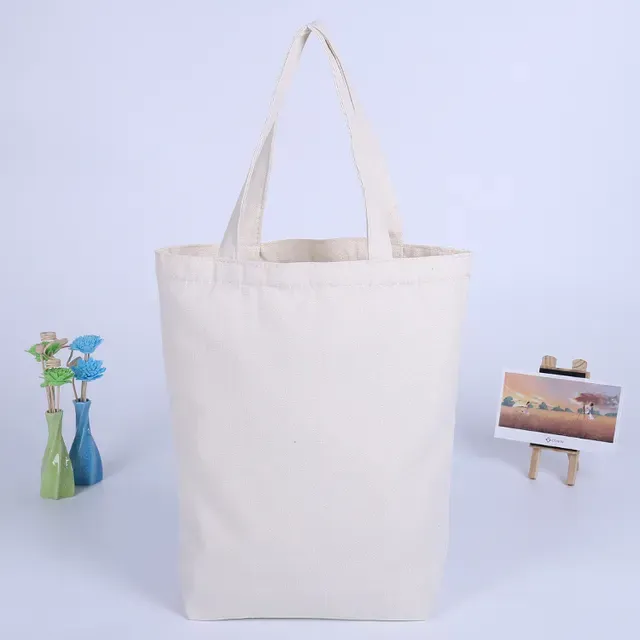
A tote is the simplest bag to make and the hardest to get the fabric right on, because the fabric is the bag. There is no lining, frame or padding to hide behind. Four materials cover almost every programme we see.
Tote bag fabrics compared: canvas, jute, non-woven, RPET
| 12 oz canvas | Laminated jute | Non-woven PP 80-100 gsm | 300D-600D RPET | |
|---|---|---|---|---|
| Fabric cost (relative) | 1.0x | 0.6x | 0.15x | 0.8x |
| Life | Years | Years | 30-50 uses | Years |
| Screen, DTG, embroidery | Bold screen only | Screen (plain) / full colour (laminated) | Screen, sublimation | |
| Eco story | Natural, biodegradable | Strongest natural signal | Reusable, recyclable | GRS recycled |
| Water | Absorbs (wax optional) | Laminated interior | Laminated option | PU coated |
| Best for | Retail, gift, brand merch | Supermarket, wine | Events, giveaways | Corporate, promo, eco retail |
Canvas tote fabric: the retail default (8-16 oz)
12 oz pre-washed cotton canvas stands up on its own, prints a one-colour logo like a poster and softens with use. It is the tote people keep. Specify pre-washed - unwashed canvas shrinks 3-8% and the first wash ruins the print alignment. For a premium step, cotton-linen; for heritage, waxed canvas.
See the custom canvas tote bag range for finished builds.
Jute bag material: the supermarket eco signal
Laminated 300 gsm jute is half the price of canvas and reads "eco" from across the car park. The lamination stops fibre shedding and spills. Print is limited to bold graphics; for detail, sew on a printed cotton panel or switch to juco (jute-cotton). Check moisture and odour on every lot - jute stored damp smells.
Non-woven PP: the cents-per-bag giveaway
80-100 gsm non-woven PP is the event and giveaway bag: ultrasonic-welded, screen-printed, cents each at volume. Laminated grades print full colour and look retail-grade. Life is 30-50 uses, which is honest reusable but not an heirloom. For the eco story, be precise: reusable and recyclable, not biodegradable.
RPET tote fabric: the corporate sustainability answer
GRS-certified RPET at 300D or 600D is the tote for corporate gifting and eco-positioned retail: coated, printable, long-lived and certified. The GRS transaction certificate ships with the order. Cost is 8-12% over virgin polyester and still below canvas.
Three questions that decide it
- How many uses? Under 50: non-woven. Years: canvas, jute or RPET.
- What print? Photographic: laminated non-woven or sublimated RPET. Logo: any. Embroidery: canvas.
- What claim? Natural: canvas or jute. Recycled: RPET. Cheapest reusable: non-woven.
Print method changes the fabric choice
The artwork decides more than the fibre does. Match the print process to the substrate before quoting:
| Print method | Best substrate | Cost per bag (1 colour) | Watch out |
|---|---|---|---|
| Screen print | Canvas 8-12 oz, non-woven | $0.08-0.15 | Each colour is a separate screen and pass |
| Heat transfer | Non-woven, RPET | $0.12-0.20 | Peels on waxed canvas; test wash first |
| Sublimation | RPET / polyester only | $0.25-0.40 | White base needed; natural fibres will not take it |
| Embroidery | Canvas 10 oz+ | $0.40-0.80 | Puckers on non-woven; needs backing patch |
Artwork with photo gradients forces polyester/RPET and sublimation. One-colour logos on a natural look mean canvas and a screen - decide the print before the fibre and the quote gets 20% cleaner.
From roll to bag
Every tote fabric we ship is weighed and shade-checked; canvas and jute lots are wash- and moisture-tested. If you want the totes sewn from the same rolls, the Senszx tote bag line runs from 100 pieces with a free sample in 3-5 days.
Handles and seams: where tote fabric actually fails
Warranty returns on totes are almost never body-fabric failures - they are handle roots and bottom seams. The fabric choice sets the reinforcement budget:
- Canvas 10 oz+ holds an X-box handle stitch directly; no patch needed below 12 kg loads.
- Canvas 8 oz and RPET need a webbing-backed handle or an internal patch; the stitch pulls through the plain cloth at 8-10 kg.
- Non-woven must carry loads in ultrasonic-welded seams or sewn-through webbing that wraps the base - stitched side seams alone open at 5-6 kg.
- Jute sews well but frays fast: overlock every cut edge and bind the top hem, or the bag unravels from the mouth down.
Ask the factory for the handle attachment drawing with the fabric quote. A $0.06 webbing upgrade beats a 4% return rate on a grocery programme.
Wash behaviour: the difference customers meet at home
Reusable totes get washed; most tote fabrics were never specified for it:
- Canvas shrinks 3-5% on first hot wash unless pre-shrunk (sanforized) - specify it, or size the pattern up and tell the label writer "cold wash".
- Waxed canvas must never see a machine: the wax migrates and stains. Spot-clean only; the care label is part of the spec.
- RPET and polyester wash cold without shrinkage, but prints matter more than cloth: heat-transfer artwork peels above 40 C.
- Jute does not survive immersion - fibres swell, the laminate blisters and the bag ripples. Wipe-clean only, and the lamination choice (PP film vs none) decides whether even that works.
- Non-woven deforms in any wash; it is priced to be replaced, not laundered.
A one-line care instruction agreed at quotation prevents the "your bag shrank" review thread that no amount of fabric quality can delete.
A worked costing: 3,000 canvas totes, line by line
Numbers make the fabric decision concrete. A 3,000-piece programme, 38 x 42 cm tote with 10 cm gusset, one-colour screen print:
| Line | 12 oz canvas | RPET 600D equivalent |
|---|---|---|
| Fabric per bag (0.55 m2) | $0.92 | $0.78 |
| Print (1 colour) | $0.11 | $0.13 (transfer) |
| Handles (webbing) | $0.14 | $0.14 |
| CMT + overhead | $0.85 | $0.82 |
| Ex-factory | ~$2.02 | ~$1.87 |
Canvas costs $0.15 more and retails $1.50-2.00 higher on the same shelf - the hand and weight read as quality. RPET wins the tender version of the same brief the moment the buyer scores certified recycled content. The fabric decision is really a channel decision; run the costing both ways before quoting either.
Sizing and gusset: the pattern decisions that follow the fabric
Fabric stiffness sets how a tote holds its shape empty, and the pattern should follow. 12 oz canvas stands on its own with a 10 cm gusset; RPET and 8 oz canvas collapse and want a stiffened base board or a boxed corner to look full on a shelf. Non-woven is patterned oversize - it has no drape to recover. Jute wants a lining or a laminated inner face, or the gusset creases permanently at the first fold. One fabric change without a pattern re-check is the most common reason a tote sample "looks cheaper than the render".
Lead times by fabric
Canvas and non-woven ship fastest from stock (3-5 days); jute depends on laminate availability (1-2 weeks); RPET custom colours follow the standard 15-20 day dye calendar. Print adds 5-7 days regardless of fabric. A tote programme needed in four weeks is a stock-colour programme by definition - decide the fabric with the calendar open.
Bottom boards and structure
A tote that stands up sells better than one that slumps, and the base insert is a fabric-adjacent decision. Options by fabric: canvas 12 oz+ needs nothing for small totes and a 1.5 mm PE board for market sizes; RPET always wants a board or a boxed base; non-woven takes a thin cardboard insert wrapped in the body fabric; jute is usually laminated stiff enough on its own. Boards add $0.08-0.15 and are removable if the care label allows washing - specify removable, or the wash instruction and the structure contradict each other.
Buyer FAQ
What is the best fabric for a tote bag?
12 oz cotton canvas is the retail default: it prints well, seams hold 15 kg+, and it survives years of use. Jute wins on eco optics, non-woven PP on unit cost, RPET when the buyer needs a certified recycled claim.
What weight of canvas should a tote be?
8 oz suits light shoppers, 12 oz is the standard retail tote, 16 oz duck adds structure for grocery loads. Below 8 oz the handles need reinforcement patches.
What is the most durable tote bag fabric?
12-16 oz cotton canvas, with waxed canvas the most weather-resistant natural option. Among synthetics, 600D RPET with a PU back-coat outlasts canvas in wet use and washes without shrinkage.
What weight canvas is best for tote bags?
10-12 oz for everyday retail totes; 8 oz for lightweight promo; 14-16 oz for market and tool bags. Below 8 oz the handle stitch pulls through under grocery loads.
Is jute or canvas better for eco tote bags?
Jute has the stronger visual eco signal and lower price; canvas lasts longer and washes. For a claim buyers can audit, GRS-certified RPET or organic cotton canvas with a transaction certificate beats both.
Free colour card and swatches
Get the colour card and three fabric proposals for your bag
Tell us the bag type and target price. We reply with two or three fabric options, swatches by courier and, if you need the bags made, a sample plan from our sister factory.