
Custom Bags as Corporate Gifts: A B2B Buyer's Guide That Actually Works
Why custom bags outperform most corporate gifts: cost-per-impression maths, which bag style fits which budget tier, fabric and branding choices that read premium, realistic MOQs and timelines for year-end gifting programmes.
7 min readcorporate giftscustom bagsB2B
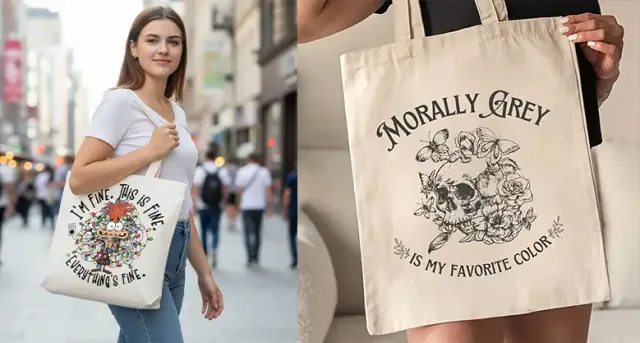
Corporate gifts fail in a predictable way: they get used once, then drawered. A custom bag is one of the few gift categories that escapes that fate, because a well-made tote or backpack earns daily use - and every day of use is a brand impression the gift keeps paying. This guide covers the maths behind that claim, which bag formats fit which budget tier, and the fabric, branding, MOQ and timeline decisions that separate a gifting programme people keep from one they quietly bin.
Why bags outperform most corporate gifts
Judge corporate gifts on cost per impression and the ranking changes fast. A $6 custom canvas tote used twice a week for two years delivers brand visibility in public - on commutes, in supermarkets, at gyms - several hundred times. A $25 branded power bank lives in a drawer; a $15 notebook lasts a quarter. Only apparel rivals bags on wear-time, and apparel carries a sizing problem that triples SKU complexity - bags are one-size, which is why procurement teams default to them for mixed-recipient lists.
Two more practical advantages: bags ship flat and light relative to their perceived value, keeping freight sane on bulk programmes; and they avoid the compliance drag of electronics - no battery restrictions, no charger standards, no warranty questions. The risk sits elsewhere: a flimsy bag broadcasts cheapness every single day it is used. The whole programme therefore rises or falls on fabric and construction choices, which is where a buyer's attention should go first.
Matching bag format to budget tier
Most corporate gifting programmes run three recipient tiers, and the bag world maps onto them cleanly.
| Tier | Budget (ex-factory) | Formats that fit | Typical build |
|---|---|---|---|
| Event / giveaway | $1.50-3.50 | Non-woven totes, light canvas totes, cinch sacks | 80 GSM non-woven or 5-6 oz canvas, 1-colour print |
| Employee / client | $4-9 | 8-10 oz canvas totes, drawstring backpacks, zip pouches | Stitched handles, grommets, 1-3 colour print |
| Executive / VIP | $10-20 | Laptop backpacks, travel duffels, leather-trim totes | 600D+ polyester or waxed canvas, custom hardware |
The structure that works best in practice is one visual identity across tiers: the same fabric family, print colour and logo placement applied to a tote, a pouch and a backpack. Recipients compare gifts - mixed programmes that look like one collection read as intentional, while three unrelated products read as leftovers. Our guides to tote bag fabrics and drawstring bag specs cover the entry tiers; for the executive tier, the 600D vs 900D vs 1680D comparison explains what the extra dollars buy in cloth.
Fabric and branding choices that read premium
The difference between a gift that gets kept and one that gets binned is rarely the logo - it is the hand feel in the first five seconds. Three upgrades consistently pay for themselves on corporate gift bags. Fabric weight first: stepping a tote from 5 oz to 8-10 oz canvas costs $0.60-1.20 per bag and transforms the perceived value; the bag stands on its own, the handles feel load-worthy, and the print sits better on the denser face. Second, branding restraint: the strongest corporate pieces carry a small embroidered mark or a tonal print rather than a billboard logo - recipients use subtle bags in public, which is the entire point of the programme. Embroidery runs $0.50-1.20 per position and effectively never wears out; water-based screen printing gives the soft matte finish premium retail uses. Third, finishing details recipients touch daily: branded zipper pulls, cotton webbing instead of polypropylene, an interior pocket. Each adds $0.15-0.60 and does more for keep-rate than any artwork revision. On colour: stock fabric shades (natural, black, navy) hold MOQs down and reproduce consistently; corporate brand colours need a dye lot - the maths is in our MOQ and lab dips guide - so most programmes print the brand colour onto a stock shade instead of dyeing the cloth to it.
MOQs, timelines and the year-end crunch
Corporate gifting concentrates brutally in Q4, and the calendar is the most common programme-killer. Working backwards from a December handout: sampling takes 5-10 days, revisions 3-7, bulk production 25-40 days depending on construction, and sea freight from Asia adds 25-35 days to most Western markets. That puts the safe order deadline in late September; October orders still land by air freight, which halves transit but can double landed cost on bulky items like backpacks. MOQ-wise, corporate programmes are friendlier than buyers expect: stock-fabric bags with 1-2 colour printing start at 100-300 pieces, well within reach of mid-size companies. Custom-dyed fabric, laminated full-colour builds or moulded hardware push minimums to 500-1,000 pieces and belong in annual programmes, not one-off events. Two procurement safeguards worth writing into the PO: an approved pre-production sample held as the quality reference, and an inspection stage before balance payment - the same AQL logic covered in our pre-cutting fabric tests, compressed into a one-day check at programme scale.
Sustainability claims that survive scrutiny
Corporate gifts increasingly route through procurement teams with ESG checklists, and bags are an easy win there - if the claims hold. Natural cotton canvas is plastic-free and compostable; recycled cotton blends and GRS-certified RPET add a documented recycled-content story, with the paperwork explained in our RPET and GRS guide. The rule that keeps programmes out of trouble: claim only what the certificate shows. "Made with GRS-certified recycled polyester" backed by a transaction certificate survives an audit; a generic "eco-friendly" hangtag on a virgin-poly bag is a liability with enforcement tightening on green claims, and procurement teams now routinely ask for the certificate number before sign-off. For buyers choosing between natural and synthetic routes, the honest comparison in cotton vs canvas bags applies directly to gifting: natural fibres win the story and the hand feel, synthetics win on weight, weather and cost at the giveaway tier.
Running the programme: a six-line enquiry
A complete corporate gift bag enquiry fits in six lines: recipient tiers with quantities, budget per tier, bag formats, fabric and colour direction, logo artwork with placement, and the hard in-hands date. Send those six lines and factories return comparable quotes with fabric spec sheets; send "need 500 gift bags for December" in November and every option left is a compromise on quality, price or date - usually all three at once.
If the programme needs the full chain under one roof - fabric from the dye lot, cutting, sewing and inspection - the group's factory side runs custom tote programmes and custom backpack lines with mill-direct custom fabrics and in-house quality assurance. Send your tier structure through the contact form and we will return a mixed-programme quote with spec sheets attached - sampling in days, not weeks.
Free colour card and swatches
Get the colour card and three fabric proposals for your bag
Tell us the bag type and target price. We reply with two or three fabric options, swatches by courier and, if you need the bags made, a sample plan from our sister factory.