
How Much Fabric Does a Bag Need? Consumption, Waste and Cost per Bag Explained
Price per metre is only half the fabric cost. This guide shows how to turn a pattern into metres per bag - with consumption tables by bag type, the cutting-waste and width multipliers, worked costings for backpacks and totes, and the allowances that keep a dye lot from running short.
8 min readcostingconsumptionsourcing
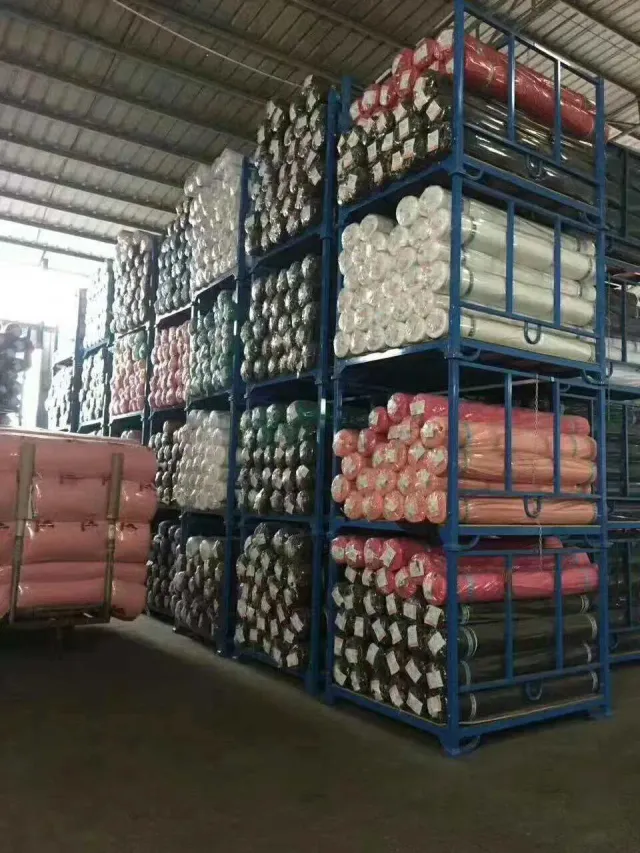
A fabric quote says $1.38 per metre. A bag brief says 2,000 backpacks. Between those two numbers sits the one that actually decides the fabric budget - metres per bag - and it is the number most inquiries skip. This guide works through it the way our costing desk does: pattern area, waste, width, allowances, and the metre count that goes on the purchase order.
Why consumption matters more than price per metre
Two quotes for "600D PU, black": $1.32/m at 57" and $1.38/m at 60". The cheaper one costs more. On a backpack marker the 60" roll yields about 5% more usable panels per metre, so the fabric line per bag lands at $2.06 on the "expensive" roll and $2.11 on the "cheap" one. Per-metre price without width and consumption is a number that cannot be compared.
Fabric consumption by bag type
Typical pattern areas for body fabric only (linings and mesh separate), measured on our markers:
| Bag type | Body fabric area | Metres per bag (58", 15% waste) |
|---|---|---|
| Shopping tote 38 x 42 cm | 0.55 m2 | 0.43 m |
| School backpack 25 L | 1.6 m2 | 1.25 m |
| Daypack 30 L | 1.9 m2 | 1.49 m |
| Laptop backpack 20 L | 1.7 m2 | 1.33 m |
| Duffel 50 L | 2.4 m2 | 1.88 m |
| Tactical pack 35 L | 2.6 m2 | 2.03 m |
| Cooler bag 20 L | 1.1 m2 | 0.86 m |
Treat the table as a starting range; a boxier pattern with fewer curved panels cuts tighter, a fashion silhouette with shaped gussets cuts looser.
The formula
Metres per bag = pattern area (m2) x (1 + waste rate) / cuttable width (m)
For a 30 L daypack: 1.9 m2 x 1.15 / 1.47 m = 1.49 m. Multiply by the order quantity, then add roll-end and defect allowances (next sections) and you have the number for the purchase order.
The three multipliers that move the number
1. Cutting waste. Simple rectangular panels (totes, duffel bodies) mark at 8-12% waste. Curved backpack panels, shaped gussets and pocket flaps push 15-22%. Fashion silhouettes with large curved pieces can hit 25%. The marker software reports the exact figure; ask the factory for the marker efficiency, not an estimate.
2. Cuttable width. Fabric is sold on the full width, cut on the usable width. A roll quoted at 57/58" with 1" of selvedge on each side cuts at 55-56". Specify cuttable width on the purchase order; the inch you lose is 1.7% of every metre you buy.
3. Directional patterns and prints. Camouflage, directional weaves and placed logos force one-way markers. Efficiency drops 5-8 points because panels cannot be rotated to nest. Solid colours and non-directional textures mark the tightest.
Width changes the metre count more than price does
The same 2,000-bag daypack programme on different roll widths:
| Roll width | Cuttable width | Metres for 2,000 bags | Fabric cost at $1.38/m |
|---|---|---|---|
| 36" (0.91 m) | 0.89 m | ~4,940 m | ~$6,820 |
| 58" (1.47 m) | 1.42 m | ~3,080 m | ~$4,250 |
| 60" (1.52 m) | 1.47 m | ~2,970 m | ~$4,100 |
A 36" roll is not 60% cheaper per metre, so it is never cheaper per bag. The lesson scales: always ask for the widest cuttable width the construction is milled in before comparing quotes.
Roll-end and defect allowances
Markers assume a continuous roll; real rolls are not. Add two allowances to the calculated total:
- Roll ends. Every roll has 1-2 m of unusable end (joins, creases, inspection cuts). At 50-100 m per roll that is 2% of fabric. Shorter rolls waste more; specify a minimum roll length.
- Defects. Even A-grade cloth carries 2-4 defect points per 100 m. Cutting around them loses 1-3%. Our inspection reports give defects per roll so the allowance is calculated, not guessed.
Rule of thumb: order 4-5% over the marker total on standard goods, 6-8% on prints and heavy coatings. Running 2% short on a dye lot costs more than the entire allowance - the re-dye comes with a 1,000 m MOQ.
Worked costing: 3,000 shopping totes
Pattern 0.55 m2, rectangular panels, 10% waste, 58" roll cutting at 1.42 m:
- 0.55 x 1.10 / 1.42 = 0.426 m per bag
- x 3,000 bags = 1,278 m
- 4% roll-end and defect allowance = 1,330 m
- Order 1,350 m (27 rolls of 50 m); at $1.38/m = $1,863, or $0.62 per bag
The order clears the 1,000 m custom-colour MOQ with room to spare, so the programme can carry a Pantone body colour at no extra fabric cost.
Worked costing: 800 laptop backpacks
Pattern 1.7 m2, shaped panels, 18% waste, 58" roll:
- 1.7 x 1.18 / 1.42 = 1.41 m per bag
- x 800 bags = 1,130 m body fabric
- 5% allowance = 1,187 m, order 1,200 m
This programme sits just above MOQ on the body fabric but far below it on the 300D lining (about 560 m). The lining goes stock colour; the body can be custom. Costing both fabrics separately is what makes that decision visible.
The fabrics buyers forget to count
Body fabric is rarely the whole bill of materials. A 30 L daypack also consumes:
| Component | Fabric | Approx. area |
|---|---|---|
| Lining | 210D or 300D PU | 2.2 m2 |
| Back panel and straps | Air mesh | 0.4 m2 |
| Base reinforcement | 1680D or 1000D | 0.35 m2 |
| Binding and piping | Same or contrast | 6-8 linear m |
Lining often exceeds body fabric in area and is routinely left off first-round costings. Ask for the full material list with areas; a complete BOM is also the fastest way to spot a factory that has not actually made a marker yet.
Converting units without losing metres
- Yards to metres: 1 yd = 0.914 m. A US quote in yards reads 9% bigger than it is.
- Kilograms to metres: metres = kg x 1,000 / (gsm x width in m). A 100 kg roll of 300 gsm at 1.47 m is 227 m, not 333 m - the width is in the denominator twice as often as buyers expect.
- Square metres to metres: divide by cuttable width, not full width.
Planning the dye lot around consumption
Once metres per bag is known, work backwards to the order quantity that fills a dye lot efficiently. At 1.49 m per bag, 1,000 m dyes 670 bags; ordering 650 bags of a custom colour wastes 3% of the lot, ordering 700 falls 45 m short. Nudging a programme by 30-50 units to land on whole dye lots is a conversation worth having before the purchase order, not after the mill asks why the re-order is 60 m.
Common consumption mistakes we see on inquiries
- Quoting bag count without a pattern. "2,000 backpacks" ranges from 2,500 to 4,500 m depending on size and silhouette. Send the pattern or at least the finished dimensions.
- Using full width in the maths. The selvedge is not fabric you can cut. 2% every time.
- Forgetting the second colour. Two-tone bags split the consumption across two dye lots; both must clear MOQ or one goes stock.
- Ordering exactly the marker total. The first roll end eats the margin; the first defect stops the line.
- Comparing quotes at different widths. The most expensive mistake on this list, and the most common.
How this connects to the rest of the fabric decision
Consumption sets the budget, but it also decides whether custom colour is reachable (MOQ and lab dips), whether a denier step is affordable per bag (600D vs 900D vs 1680D), and what the spec sheet must state about cuttable width. For the finished bag, our sister factory's custom backpack and custom tote teams cost from the same markers - one consumption figure, one supply chain.
Get a consumption figure for your bag
Send the pattern, finished dimensions or a reference sample and we return metres per bag, a full-BOM fabric list and a dye-lot plan within 12 hours - request it here or browse the fabric library for widths and stock colours first.
Buyer FAQ
How much fabric do I need for a backpack?
A 25-30 L backpack uses 1.6-1.9 m2 of body fabric, or about 1.25-1.5 m of 58" roll per bag after 15% cutting waste. Add 2.2 m2 of lining and 0.4 m2 of mesh for the full bill of materials.
How much fabric does a tote bag use?
A standard 38 x 42 cm tote with a 10 cm gusset uses about 0.55 m2 of body fabric - roughly 0.43 m of a 58" roll per bag at 10% waste, or 2,300 totes per 1,000 m.
What is a normal cutting waste percentage for bags?
8-12% for rectangular panels (totes, duffels), 15-22% for shaped backpack panels, up to 25% for fashion silhouettes with large curves. Directional prints add 5-8 points.
How do I convert fabric kilograms to metres?
Metres = kilograms x 1,000 / (gsm x width in metres). A 100 kg roll of 300 gsm fabric at 1.47 m width is about 227 m.
How much extra fabric should I order?
4-5% over the marker total for standard solids, 6-8% for prints and heavy coatings, covering roll ends and defects. Running short on a dye lot triggers a new 1,000 m minimum.
Free colour card and swatches
Get the colour card and three fabric proposals for your bag
Tell us the bag type and target price. We reply with two or three fabric options, swatches by courier and, if you need the bags made, a sample plan from our sister factory.