
PU Leather vs Microfiber Leather vs Cowhide: Choosing the Leather Look for a Bag
Three ways to put leather on a bag, at 0.2x, 0.5x and 1.0x the cost of hide. Where each one belongs, how long each one lasts, and how to specify the grain, thickness and backing so the sample matches the retail shelf.
6 min readPU leathermicrofiberfashion bags
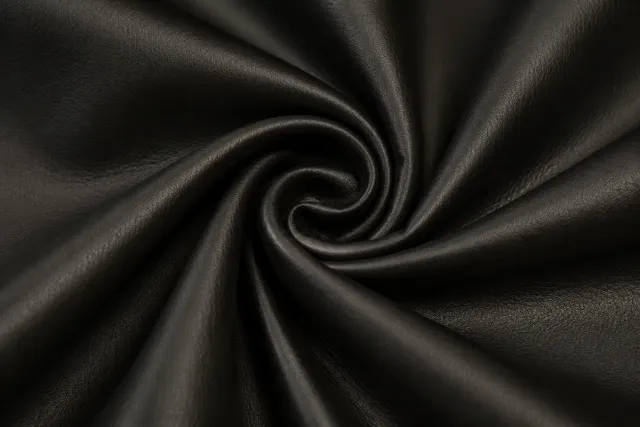
"Leather look" covers three very different materials. Picking the wrong one is the most common reason a fashion or business bag sample looks right and the bulk order gets returned two seasons later.
The three compared
| PU leather | Microfiber leather | Genuine cowhide | |
|---|---|---|---|
| Construction | PU skin on knit or non-woven | PU skin on micro-fibre non-woven | Tanned hide |
| Thickness | 0.6-1.2 mm | 0.8-1.4 mm | 1.0-1.8 mm |
| Flex life | 20,000-50,000 cycles | > 100,000 cycles | > 100,000 cycles |
| Hydrolysis life | 2-3 years | 5+ years | n/a |
| Colour MOQ | 500 m | 1,000 m | Per hide |
| Consistency | Perfect | Perfect | Hide variation |
| Vegan | Yes | Yes | No |
| Relative cost | 0.2x | 0.4-0.6x | 1.0x |
PU leather: fashion and trims
PU leather gives any grain in any colour from 500 m and embosses cleanly. It is the right material for fashion bags with a one- or two-season life, and for trims - handles, pulls, patches, base corners - on polyester and nylon bags where it lifts the perceived value for a small cost.
Its weakness is hydrolysis: heat and humidity break down the polyurethane and the surface cracks or peels after two to three years. Anti-hydrolysis grades extend that to three to five. Never use PU on a flap hinge that folds thousands of times.
Microfiber leather: the long-life synthetic
Microfiber leather is built like hide - a dense mat of ultra-fine fibres - and behaves like it: breathable, flexible past 100,000 cycles, five-plus years of hydrolysis resistance. Hand and drape are the closest of any synthetic to cowhide, at half the price and with none of the hide waste.
It is the specification for premium business backpacks and briefcases positioned against leather, and for vegan luxury lines. Stock grains are fewer than PU (10 vs 30+) and colour MOQ is 1,000 m.
Cowhide: when only the real thing sells
Full- or top-grain cowhide develops patina, carries natural markings and commands the highest price. It is heavy, varies hide to hide, and needs a leather-goods workshop rather than a bag sewing line. We source it for luxury programmes on request.
Specifying the synthetic
A PU or microfiber spec sheet needs five lines or the sample will not match bulk:
- Thickness in mm (0.8 mm fashion, 1.0-1.2 mm bodies, 1.2-1.4 mm wear zones)
- Backing: knit (soft, drapey) or non-woven (structured)
- Grain: by name and sealed swatch (Saffiano, pebble, Nappa, croc)
- Colour: Pantone plus sealed lab dip; leather-look colours shift with grain depth
- Compliance: REACH, Prop 65, phthalate-free; anti-hydrolysis grade if the market is humid
Test it
Flex (bally flexometer), hydrolysis (jungle test at 70 C / 95% RH), rubbing fastness and thickness on every lot. Swatches of PU, microfiber and cowhide ship together on request so you compare hand and weight side by side before deciding.
Our sister factory builds fashion and mini backpacks in all three, with embossing and foil in-house, from 100 pieces.
Free colour card and swatches
Get the colour card and three fabric proposals for your bag
Tell us the bag type and target price. We reply with two or three fabric options, swatches by courier and, if you need the bags made, a sample plan from our sister factory.